Aglaonema Growing Guide for Commercial Growers | Foremost
6/9/2026
Practical growing recommendations from Foremost to help you establish healthy plants, manage greenhouse conditions, and grow Aglaonema with confidence.
Practical growing recommendations from Foremost to help you establish healthy plants, manage greenhouse conditions, and grow Aglaonema with confidence.
Aglaonema has earned its place in tropical foliage production. Known for its attractive leaf coloration and patterns, remarkable shade tolerance, and wide range of varieties, this versatile crop offers growers opportunities across several markets, from interiorscaping and independent garden centers to larger retail programs.
Getting the fundamentals right is key to providing consistent quality and results. Managing temperature, light, media, humidity, and young plant establishment provides the foundation for growing a successful crop.
At Foremost, we know that every crop decision involves more than choosing an attractive plant. Growers need to consider greenhouse space, production timing, labor, quality, and marketing of the finished product.
Drawing on our team’s experience with tropical young plants, this guide covers the essential practices for successful Aglaonema production and the decisions worth considering before adding the crop to your greenhouse.
Aglaonema Growing Conditions: Quick Reference
Aglaonema, also known as Chinese evergreen, is native to the shaded areas of the warm and humid tropical regions of Asia. As a member of the Araceae family, it shares some growing preferences with other tropical foliage crops, including Philodendron and Anthurium.
Its natural environment helps explain why warmth, filtered light, and careful moisture management are so important.
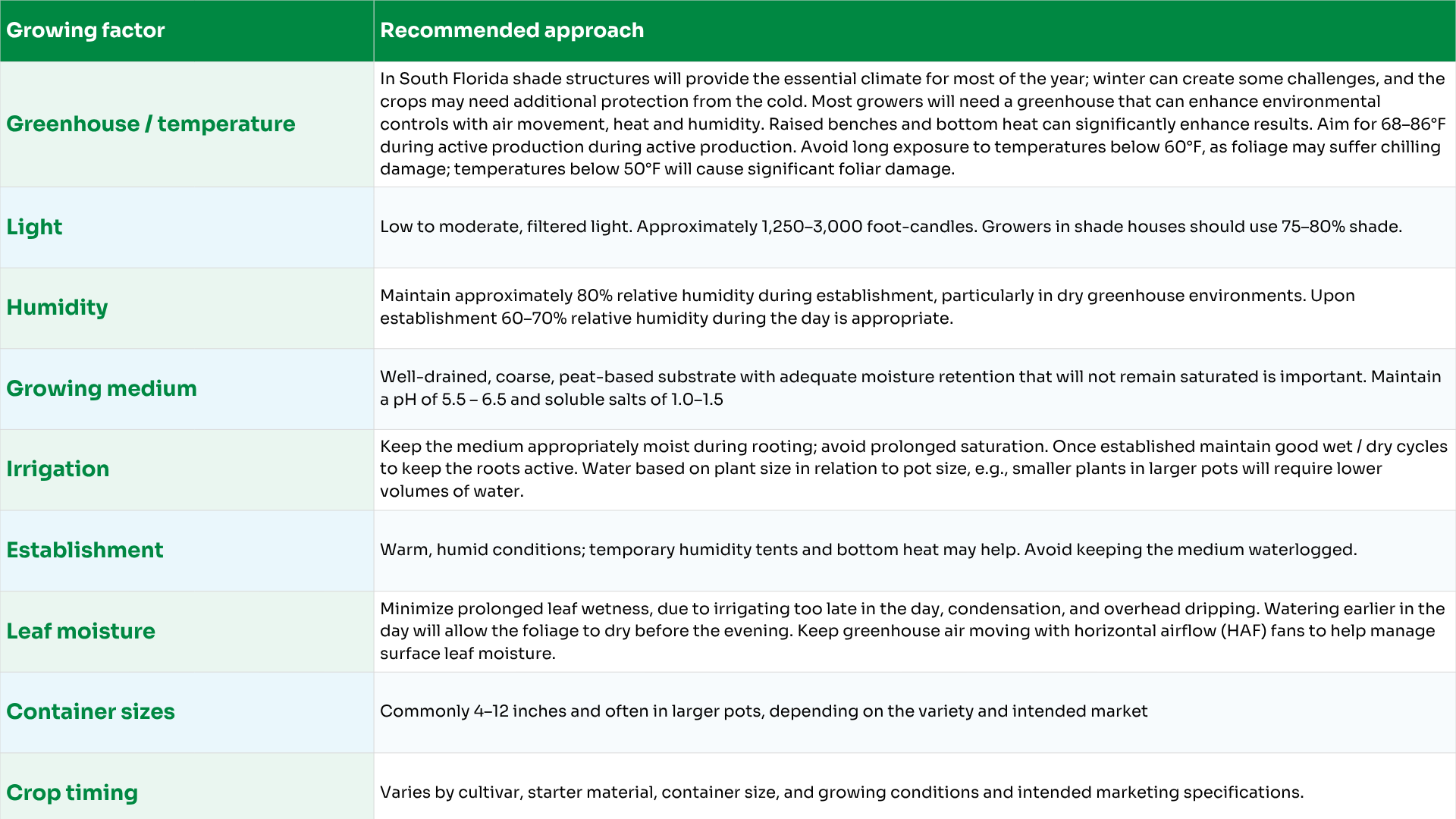
These guidelines provide a general starting point. Specific recommendations should be adjusted to the cultivar, greenhouse environment, and production system.
Establishing a Crop Plan
Foremost offers a wide selection of varieties to consider when planning. The intended market and use help determine production timing, variety, pot size, and the appropriate starting material. Foremost offers several starting-material options.
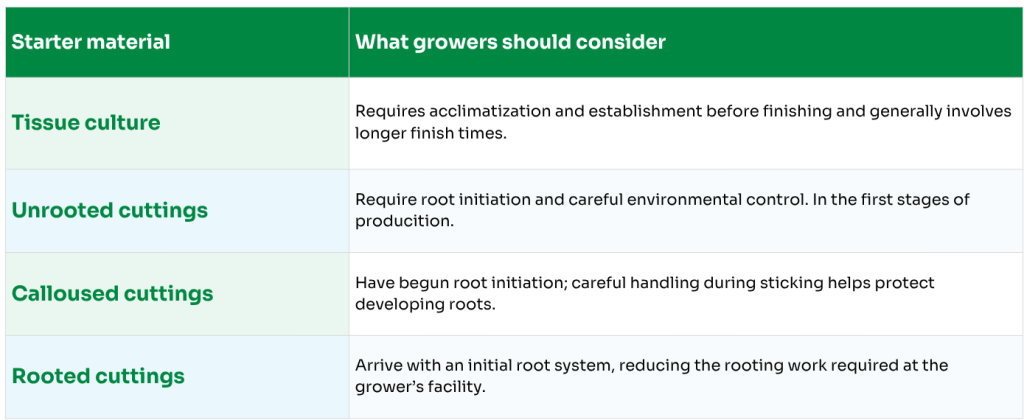
By beginning with material that has already initiated roots, growers can reduce some of the work associated with starting from unrooted cuttings.
This can be especially valuable when introducing a new crop or managing greenhouse space alongside established production programs.
A practical consideration: The initial price of starter material is only one part of the production decision. Rooting time, labor, greenhouse space, total growing time, and potential losses also affect the overall cost of producing a finished plant.
Choosing Aglaonema Varieties for Different Markets
Aglaonema offers growers a broad selection of foliage patterns and colors, leaf and plant sizes, as well as growth habits.
Choosing the right variety is not simply about appearance. It also means understanding how that variety fits your production system and the market you want to serve.
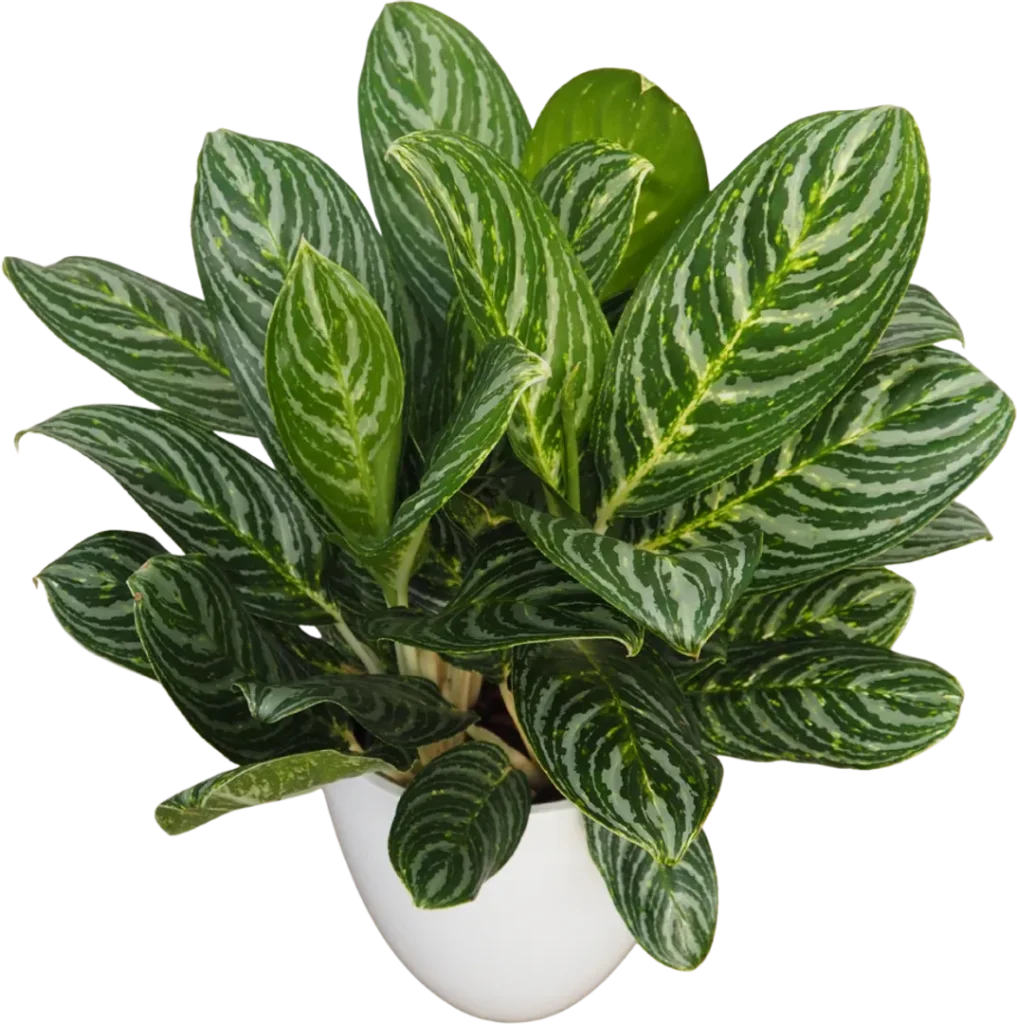
Green and Silver Varieties: Established Foliage Options
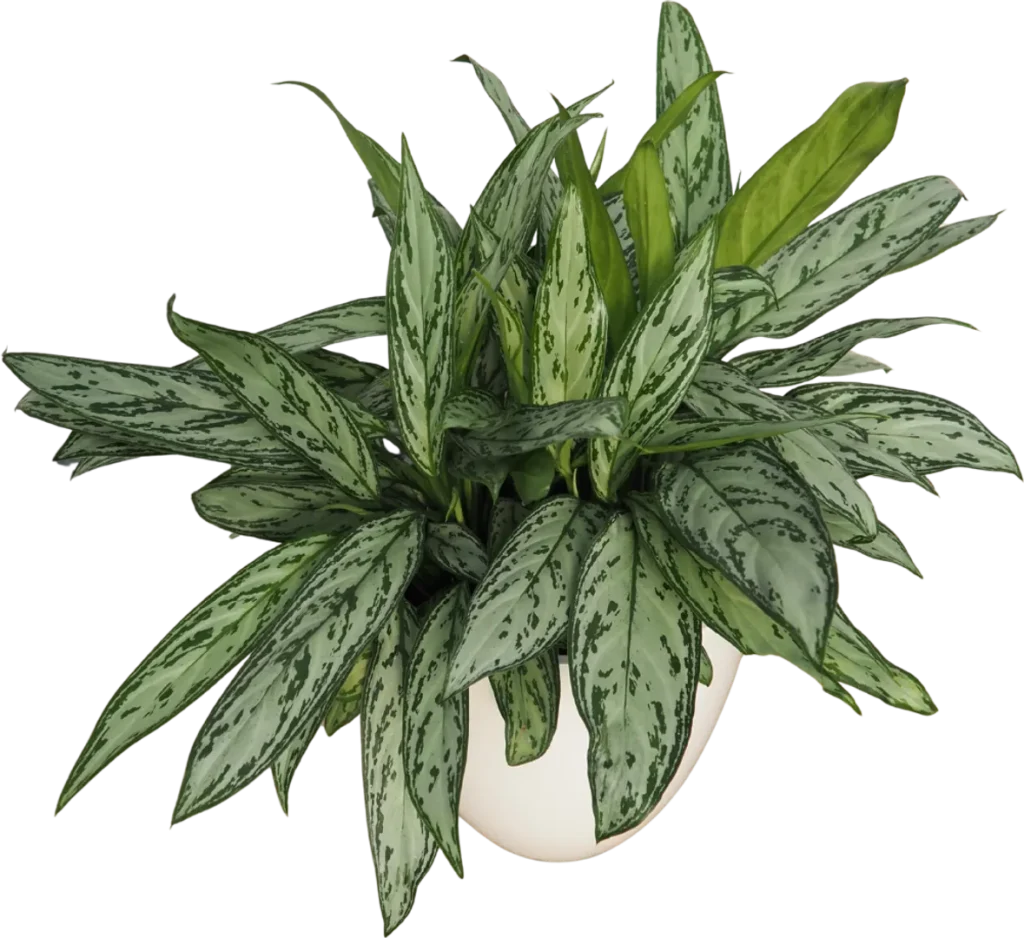
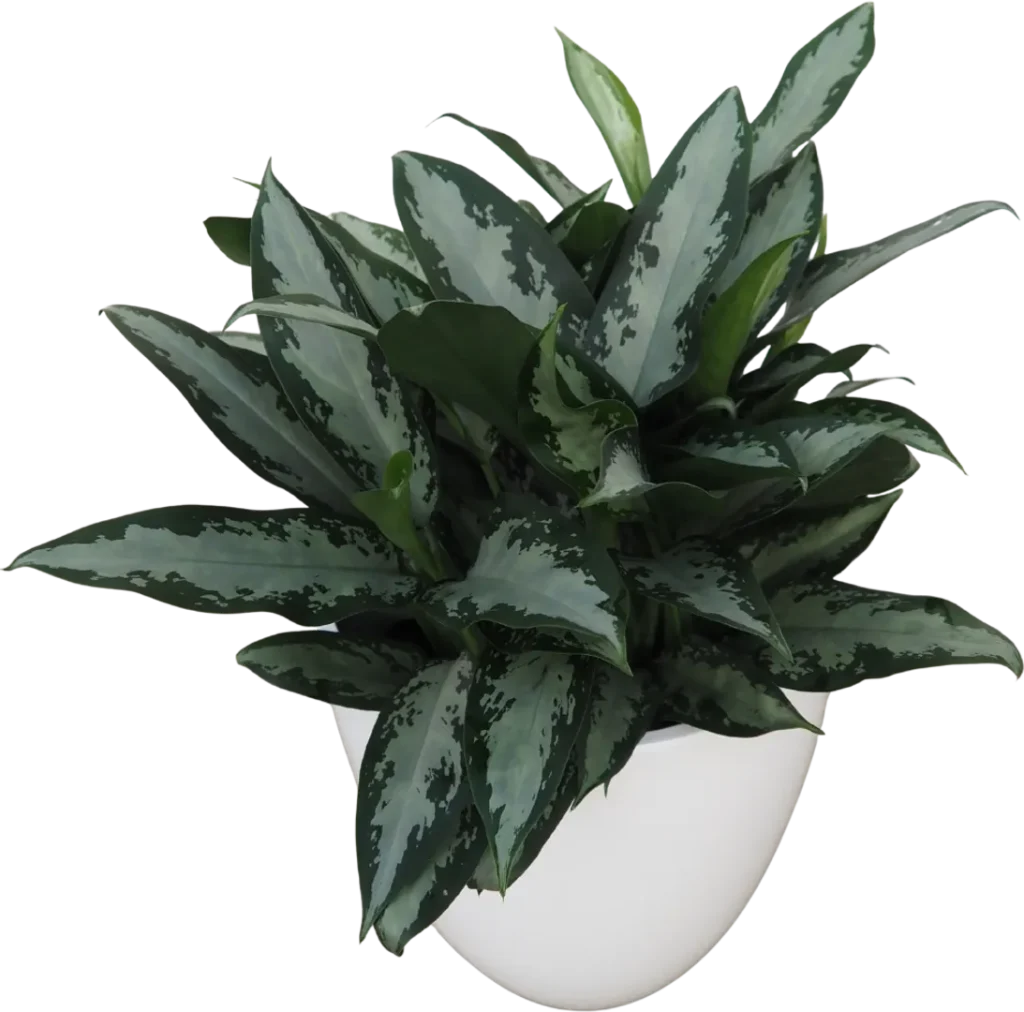
Traditional green and silver selections remain important for interiorscaping and larger indoor foliage programs.
Varieties such as Maria and Silver Bay are familiar choices in the market. Maria is often suited to smaller containers, while Silver Bay is commonly used for larger finished plants. Foremost also has a wide selection of excellent green and silver varieties named Stars of India.
These selections can provide a practical starting point for growers exploring Aglaonema production.
Colorful Varieties: Opportunities for Premium Programs
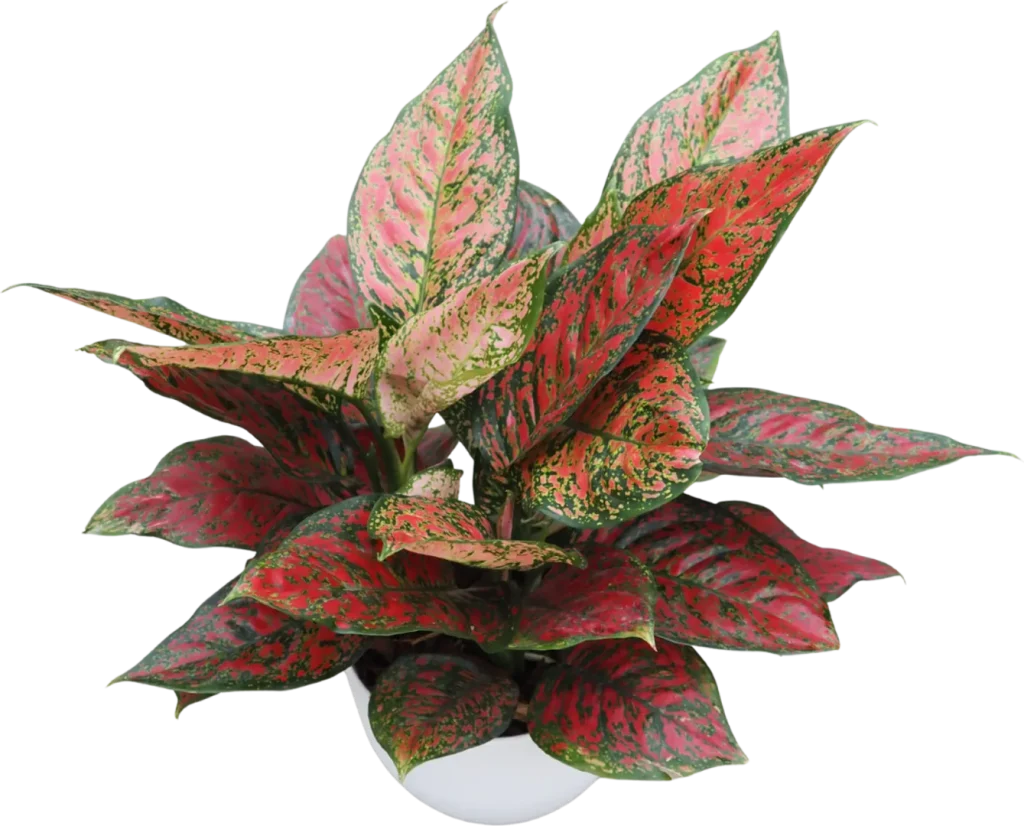
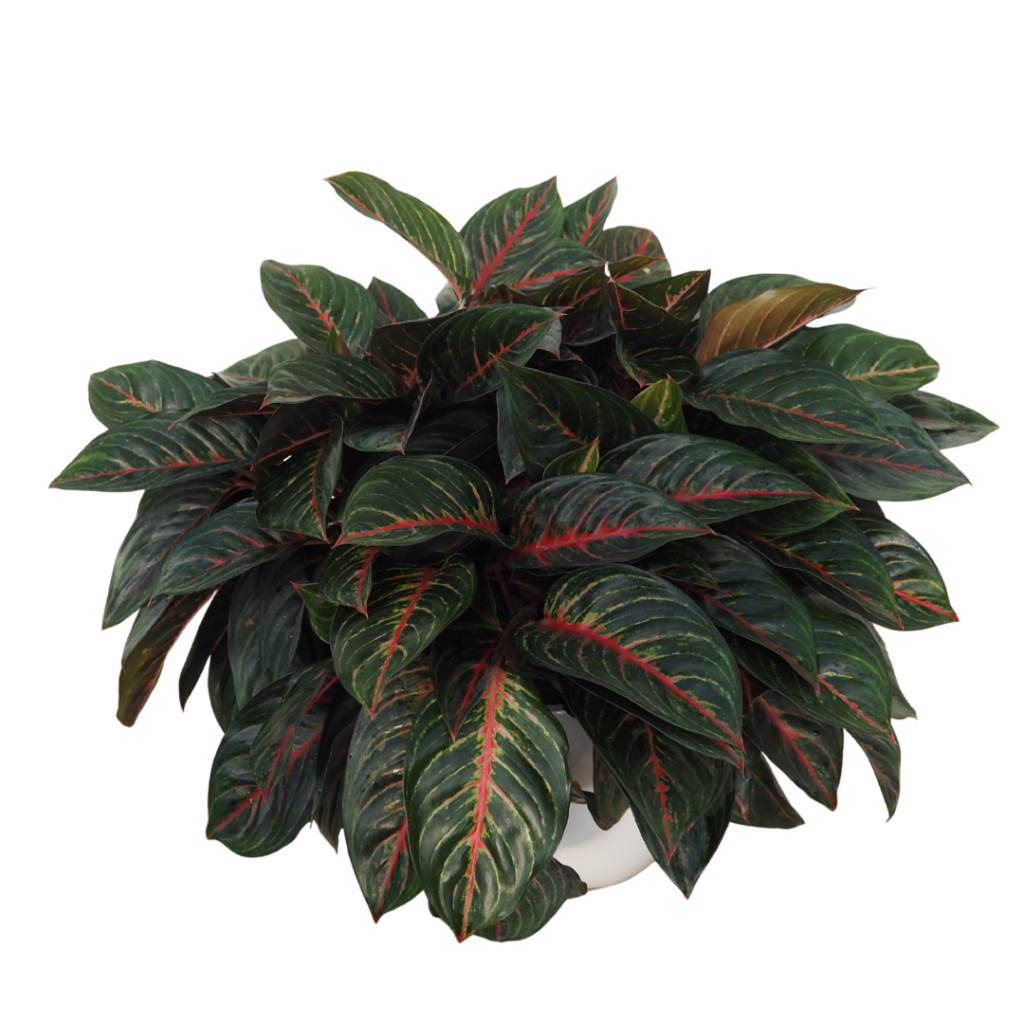
Modern breeding has introduced Aglaonema varieties with striking red, pink, and multicolored foliage.
Specialty selections, including those within the Jazzed Gems group, can be particularly appealing for compact, premium tabletop plants as well as other interior applications, and independent garden center programs.
Their distinctive appearance creates striking visual interest even in smaller containers.
Some highly colored varieties may grow more slowly than traditional green selections, so production planning should account for differences in cultivar vigor and growing times.
Stars of India and New Introductions
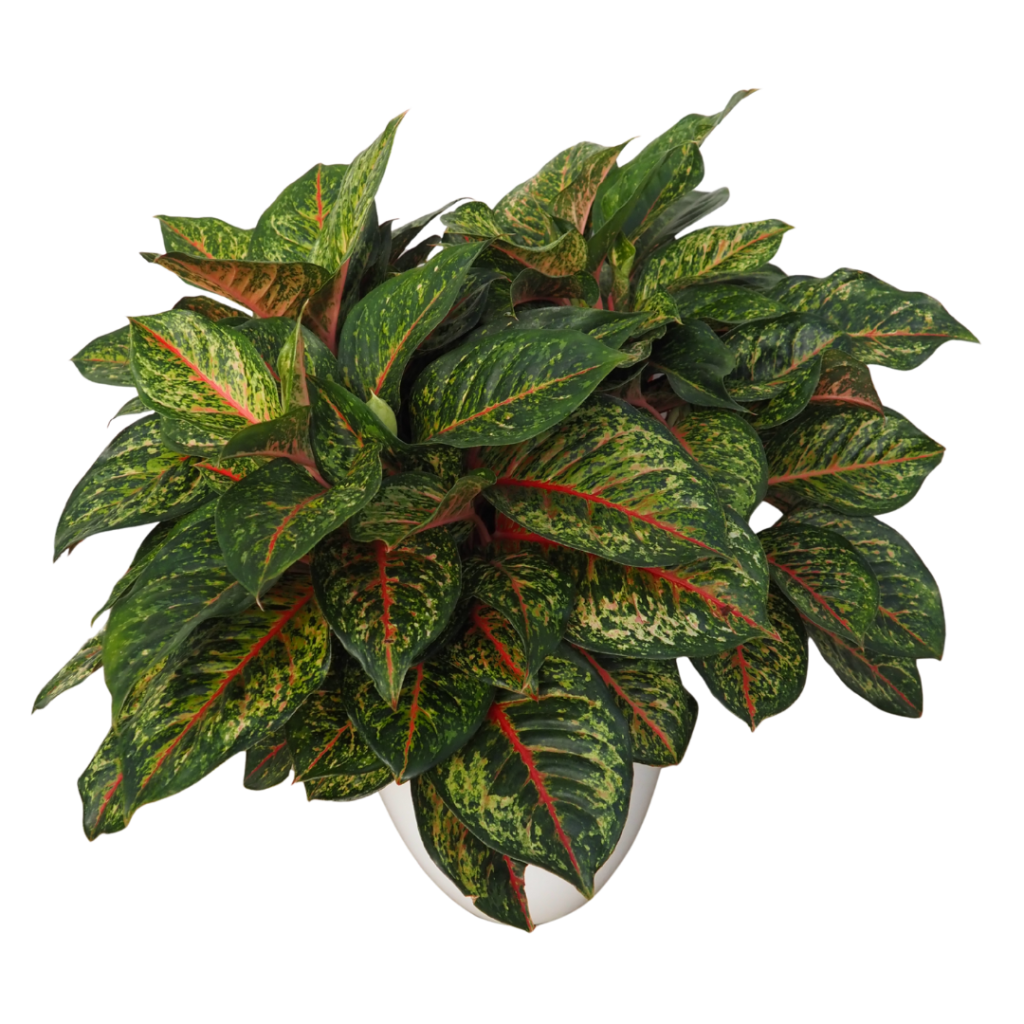
The Stars of India series and other newer selections provide additional opportunities for growers interested in expanding their Aglaonema assortment.
Depending on the cultivar, these plants may be suitable for medium or larger finished containers.
The best choice will depend on growth habit, production objectives, and customer expectations.
At Foremost, we encourage growers to evaluate varieties based on both their visual appeal and how well they fit the intended production program.
Container Sizes and Crop Planning: Growing with Purpose
Aglaonema can be produced in finished containers ranging from compact 4- and 5-inch pots to larger 6-, 8-, and 12-inch decorative foliage pots. Interiorscape applications typically use even larger pots.
The appropriate container depends on cultivar vigor, plant architecture, desired finish, and market requirements.
For larger finished plants, some growers may benefit from initially establishing young plants in smaller containers before transplanting them into their final pots.
This approach can help manage greenhouse space when seasonal crops are occupying production areas as well as minimizing the risk of overwatering.
Transplanting also requires additional handling and labor. Growers should consider whether the space savings justify those requirements.
Finishing time will vary according to cultivar, starter material, number of plants per pot, growing conditions, and desired finished appearance.
There is no single production schedule that applies to every Aglaonema variety.
Developing realistic crop plans begins with understanding the growth characteristics of the selected cultivar, the conditions available in your greenhouse, and what the finished product should look like. Our team can help growers with those decisions.
Aglaonema Growing FAQs: Answers for Commercial Growers
1. What temperature is best for growing Aglaonema in a greenhouse?
Aglaonema performs best under warm tropical conditions. Foremost’s growing team recommends approximately 68–86°F (20–30°C) during active production. Extended periods of cooler temperatures may slow growth and contribute to moisture-related challenges.
2. Can Aglaonema grow in low-light greenhouse conditions?
Yes. Aglaonema is naturally shade tolerant and can be grown under relatively low light levels. However, growers should adjust irrigation and monitor temperature carefully because plants may use water more slowly in more deeply shaded environments.
3. Why do Aglaonema plants develop root problems?
Root problems may be associated with prolonged media saturation, inadequate drainage, or unfavorable growing conditions. Root damage caused by excessive moisture can sometimes produce symptoms that resemble insufficient irrigation. A well-aerated substrate and appropriate irrigation management are essential for healthy root development. Follow the fertilization recommendations to keep EC readings below 1.5; sustained higher levels can stress roots. Periodically inspect the roots to ensure they are white and healthy.
4. What is the advantage of starting Aglaonema from rooted or calloused cuttings?
Calloused cuttings have begun root initiation, while rooted cuttings arrive with an initial root system. This reduces some of the rooting work required at the grower’s facility compared with unrooted cuttings or tissue-cultured material.
5. How long does Aglaonema take to finish?
Finishing time depends on the cultivar, starter material, container size, number of plants per pot, and greenhouse conditions. Growers should use cultivar-specific production recommendations when planning crop schedules.
Growing Success Starts with the Right Foundation
Aglaonema offers commercial growers an opportunity to expand their tropical foliage programs with a versatile crop suited to a range of indoor markets.
Its natural shade tolerance, diverse foliage, and variety of finished plant sizes make it an attractive option. But consistent results depend on understanding the crop and making informed production decisions from the beginning.
Warm temperatures, appropriate light, well-drained substrates, careful moisture management, and suitable starter material all contribute to healthy plant development.
At Foremost, tropical plants are our specialty, and we believe that sharing growing knowledge is just as important as providing quality young plants.
Whether you’re exploring Aglaonema for the first time or looking to expand an existing program, our team is here to help you evaluate the varieties and starting material that best fit your operation.
Ready to explore Aglaonema for your greenhouse?
Connect with your Foremost Territory Manager to learn more about our Aglaonema program, available varieties, and starting material options.
Foremost Where Growth Begins.
Explore how Foremost can support your rotation planning with availability calendars, planning tools, and insights into tropical plant demand. Together, we can make every season a profitable one.